
Posted by Electric Solenoid Valves on Mar 13th 2026
Pneumatic vs Motorized Valves: What’s the Difference?
Pneumatic vs Motorized Valves: What's the Difference and Which Should You Choose?
Automated valves eliminate manual operation and improve efficiency, but the right choice depends on whether you're moving air or liquid. Selecting incorrectly can increase operating cost, reduce reliability, or create unnecessary installation complexity.
When comparing pneumatic and motorized valves, the differences lie in how they generate motion, which media they control, and how they integrate into your system.
Both automate flow. Both eliminate manual valve operation. But internally, they operate in completely different ways.
If you are deciding between pneumatic vs motorized valves, you need to evaluate:
- Power source
- Media type
- Switching speed
- Infrastructure requirements
- Energy consumption
- Long-term maintenance
Choosing incorrectly can increase operating cost, reduce system reliability, or create unnecessary installation complexity.
Let's break down pneumatic vs motorized valves in detail.
How Pneumatic Valves Work
In a pneumatic vs motorized valves comparison, pneumatic valves rely on compressed air to create mechanical movement.
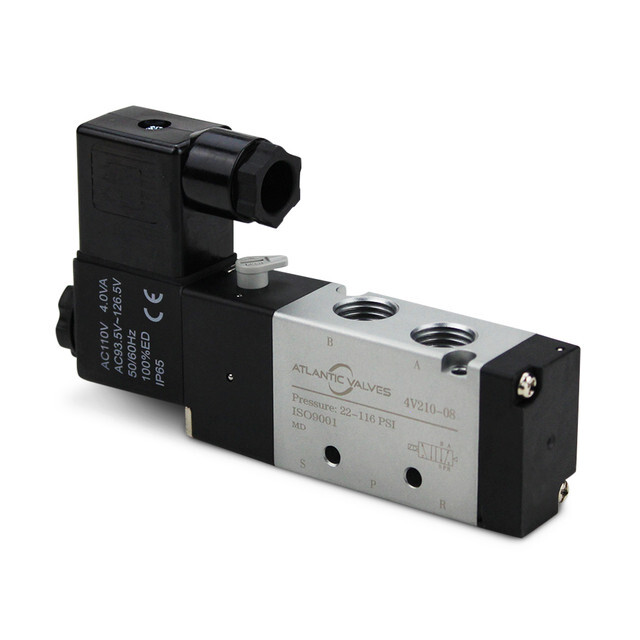
A pneumatic valve typically uses an electrically energized solenoid to redirect air pressure. That air pressure then moves an actuator or air cylinder.
Basic Operating Sequence
- An electrical signal energizes the solenoid coil
- Internal plunger shifts
- Compressed air reroutes through ports
- Air pressure drives actuator movement
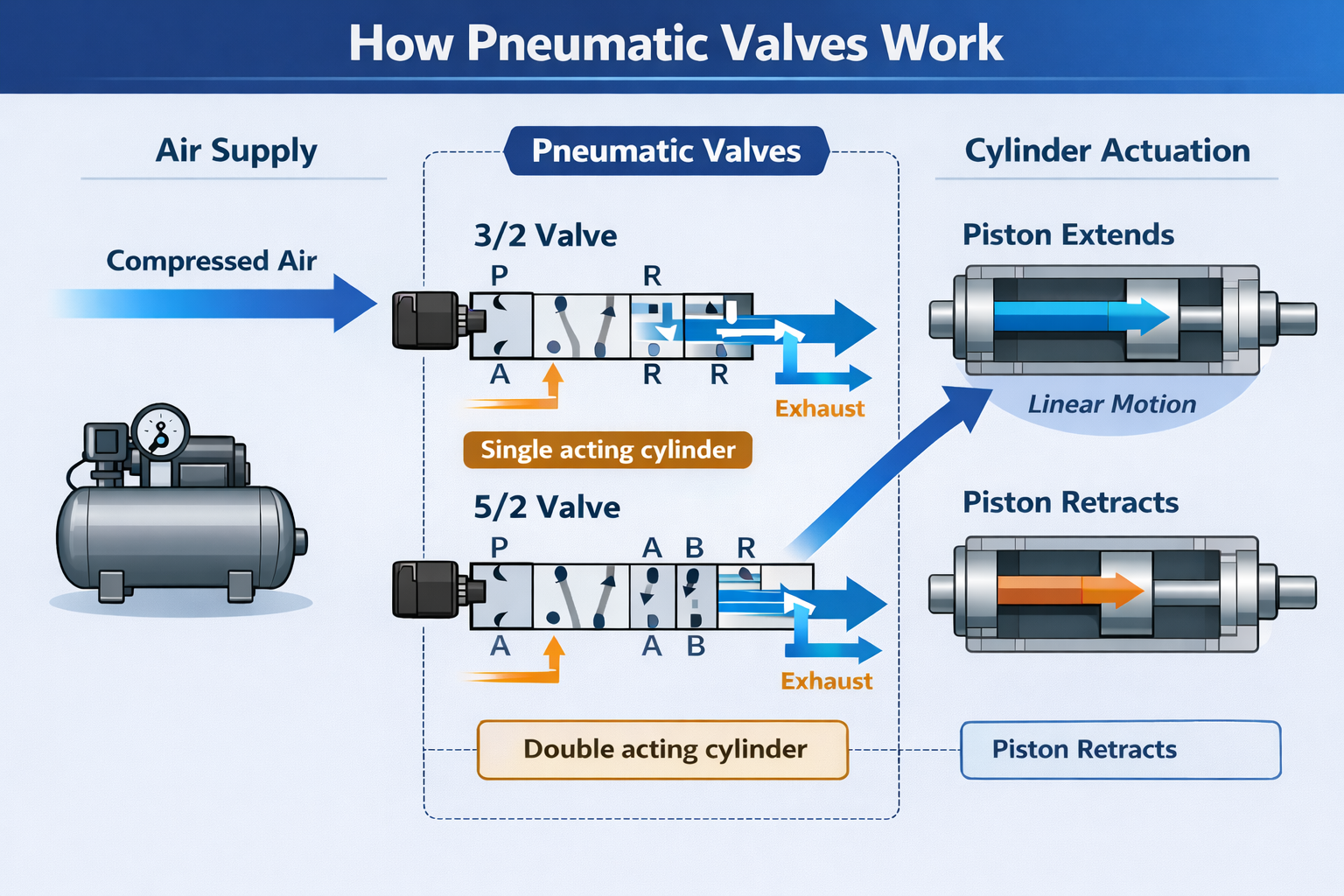
Pneumatic valves do not directly rotate a ball. Instead, they control airflow, which performs the work.
Where Pneumatic Valves Are Used
- Automation systems
- Packaging equipment
- Robotic arms
- Air cylinders
- High-speed assembly lines
| BROWSE PNEUMATIC VALVES |
In a pneumatic vs motorized valves evaluation, pneumatic systems dominate when speed and rapid cycling matter.
How Motorized Valves Work
In the pneumatic vs motorized valves comparison, motorized valves use an electric motor to directly rotate the valve stem.
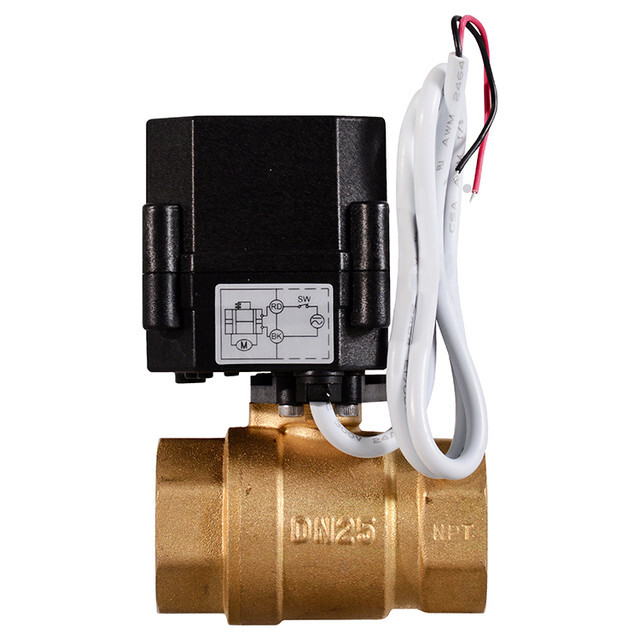
Most commonly, this is a motorized ball valve
Operating Sequence
- Voltage applied to the actuator
- The internal motor turns the gears
- Stem rotates 90 degrees
- The ball opens or closes the flow
Unlike pneumatic valves, motorized valves do not require compressed air.
| BROWSE MOTORIZED BALL VALVES |
They are commonly available in:
- 12V DC
- 24V DC
- 110V AC
In a pneumatic vs motorized valves decision, motorized valves are typically selected for liquid flow control.
Pneumatic vs Motorized Valves: Core Differences
Here is a direct breakdown of pneumatic vs motorized valves:
| Feature | Pneumatic Valve | Motorized Valve |
|---|---|---|
| Motion Source | Compressed air | Electric motor |
| Media | Air systems | Water, liquids, and some gases |
| Speed | Milliseconds | 5 to 15 seconds |
| Infrastructure | Air compressor required | Electrical only |
| Energy Use | Continuous air system | Power only during actuation |
| Noise | Air exhaust sound | Quiet motor sound |
| Best For | Rapid cycling | Water control |
When analyzing pneumatic vs motorized valves, speed is often the first deciding factor.
Switching Speed and Cycle Life
In a pneumatic vs motorized valves comparison:
- Pneumatic valves switch extremely fast
- Motorized valves rotate slowly but steadily
If your application cycles multiple times per minute, pneumatic valves are typically the correct solution.
If your application opens and closes occasionally, motorized valves are more practical.
Using motorized valves in high cycle automation is a common misapplication.
Installation Complexity
Installation requirements heavily influence the pneumatic vs motorized valves decision.
Pneumatic Valve Requirements
- Compressed air supply
- Regulator
- Air filtration
- Tubing and fittings
- Electrical wiring
Motorized Valve Requirements
- Electrical power
- Basic wiring
- Mounting space
If no compressed air is available in your facility, pneumatic vs. motorized valves usually favor motorized.
Energy Consumption
Compressed air is one of the most expensive utilities in industrial systems.
In a pneumatic vs motorized valves cost comparison:
- Pneumatic systems consume energy continuously via a compressor
- Motorized valves consume power only during movement
For low-frequency actuation, motorized valves are typically more energy efficient.
Reliability and Maintenance
When comparing pneumatic vs motorized valves, maintenance depends on the environment.
Pneumatic Risks
- Moisture in air lines
- Contaminated air
- Seal wear
Motorized Risks
- Gear wear
- Voltage mismatch
- Electrical exposure
In clean environments, both perform reliably. In poorly maintained air systems, pneumatic valves can experience sticking. Routine air filtration checks extend pneumatic valve life, while voltage verification prevents motorized actuator failures.
Fail Safe Operation
- In pneumatic vs motorized valve selection, fail safe behavior is critical.
- Pneumatic valves often use a spring return design.
- Motorized valves may use a capacitor return for automatic positioning during power loss.
- Always verify whether a normally open or normally closed configuration is required.
Noise Considerations
Pneumatic valves release air during operation, producing sound. This can be reduced with simple accessories like mufflers, which lower exhaust noise in factory environments. Motorized valves generate brief motor noise only during rotation. In residential irrigation or indoor water systems, motorized valves are typically preferred.
Application Examples
High-Speed Packaging Line
This environment favors pneumatic valves due to rapid actuation needs.
Irrigation System
This favors motorized valves due to:
- Water media
- Quiet operation
- Simple electrical integration

When comparing pneumatic vs motorized valves, always match the valve to media type first.
Cost Comparison
| Feature | Pneumatic Valve | Motorized Valve |
|---|---|---|
| Motion Source | Compressed air | Electric motor |
| Typical Applications | Air-powered automation systems | Water, liquid, and general process control |
| Speed | Milliseconds | 5 to 15 seconds |
| Infrastructure | Air compressor required | Electrical power only |
| Energy Use | Continuous air system required | Power mainly during actuation |
| Noise | Air exhaust sound | Quiet motor sound |
| Best For | Rapid cycling | Water control |
If compressed air already exists, pneumatic vs motorized valves may favor pneumatic.
If not, motorized usually wins on simplicity.
Common Selection Mistakes
When choosing between pneumatic vs motorized valves, avoid:
- Installing pneumatic without an air supply
- Using motorized valves for rapid automation
- Ignoring the fail-safe needs
- Selecting an incorrect voltage
- Oversizing or undersizing the port
These issues cause more failures than product defects.
Quick Selection Guide
Choose Pneumatic If:
- Controlling air cylinders
- High cycle automation
- Factory environment
- Existing compressor system
Choose Motorized If:
- Controlling water
- Irrigation or tank fill
- Remote shutoff
- Residential systems
- No air infrastructure
Final Verdict: Pneumatic vs Motorized Valves
There is no single “best” valve type—your choice depends entirely on the application.
- Pneumatic valves excel in high‑speed automation and compressed air control.
- Motorized valves are ideal for liquid flow, irrigation, and simple electrical integration.
Key factors to consider include:
- Media type
- Required switching speed
- Available infrastructure
- Budget
- Maintenance capacity
If you’re working with compressed air, explore our pneumatic valve collection.
For water or liquid systems, see our motorized ball valve options, available in 9–24V AC/DC and 110–230V AC configurations.
Still unsure which valve fits your system? Share your media type, operating pressure, voltage, and cycle frequency - we'll help you select the right solution the first time. Give us a call at 800‑983‑8230 or email us at sales@electricsolenoidvalves.com.