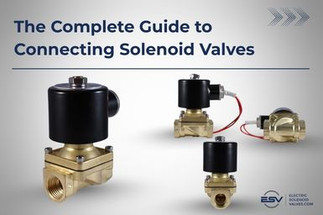
Posted by Electric Solenoid Valves on Dec 17th 2025 The Complete Guide to Connecting Solenoid Valves Suppose you’re installing a new solenoid valve (or replacing one that failed), the fastest way to leak-free installation. In that case, a reliable setup is to nail two things: mechanical connect … read more
Posted by Electric Solenoid Valves on Nov 28th 2025 How Does a 3 Way Ball Valve Work? L Port vs T Port Explained How Does a 3 Way Ball Valve Work A 3-way ball valve looks simple from the outside, but internally it is doing more than just on or off. With three ports and a ball that has an L or T-shaped bore, a 3- … read more
Posted by Electric Solenoid Valves on Nov 11th 2025 The Benefits of a Motorized Ball Valve and How It Operates Motorized ball valves pair a quarter-turn ball valve with an electric actuator. They deliver full-port flow, low pressure drop, and a gentle open and close that reduces water hammer. Compared to many … read more
Posted by Electric Solenoid Valves on Nov 4th 2025 Why is Orifice a Crucial Component for Flow Rate Control Ever wonder why two solenoid valves that look the same on the outside have totally different flow numbers on the spec sheet? Same coil, same body size, same pipe threads—yet one moves plenty of … read more
Posted by Electric Solenoid Valves on Oct 28th 2025 What Is a Y-Strainer and How Does It Work? A Y-strainer (a.k.a. wye strainer) is a compact inline filter that catches debris—rust flakes, pipe scale, sand, Teflon tape fragments—before it reaches sensitive components like solenoid … read more
Posted by Electric Solenoid Valves on Oct 15th 2025 Brass vs Stainless Electric Ball Valves Picking the right valve body material is the fastest way to avoid leaks, stuck balls, and premature actuator issues. This guide compares brass vs. stainless for electric (motorized) ball valves, so yo … read more