
Posted by Electric Solenoid Valves on Jan 28th 2026
What Is a Low Pressure Gas Solenoid Valve?
Low pressure gas systems are everywhere: residential gas trains, burner control, laboratory equipment, air-assisted processes, and small industrial appliances. While these systems operate at much lower pressures than compressed air or hydraulic lines, they are far less forgiving when it comes to leakage, improper sealing, or incorrect valve design.
A low-pressure gas solenoid valve is designed to open or close gas flow reliably when only minimal pressure is available to move the valve internals. Using the wrong valve in these systems leads to common failures, buzzing, failure to open, slow response, or gas leakage that fails safety checks.
This guide explains what a low-pressure gas solenoid valve is, how it works, typical pressure ranges, and how to select the correct valve for your application.
What Is a Low-Pressure Gas Solenoid Valve?
A low-pressure gas solenoid valve is an electrically actuated valve engineered to control gas flow when system pressure is very low, typically measured in inches of water column (in. W.C.) or low single-digit PSI.
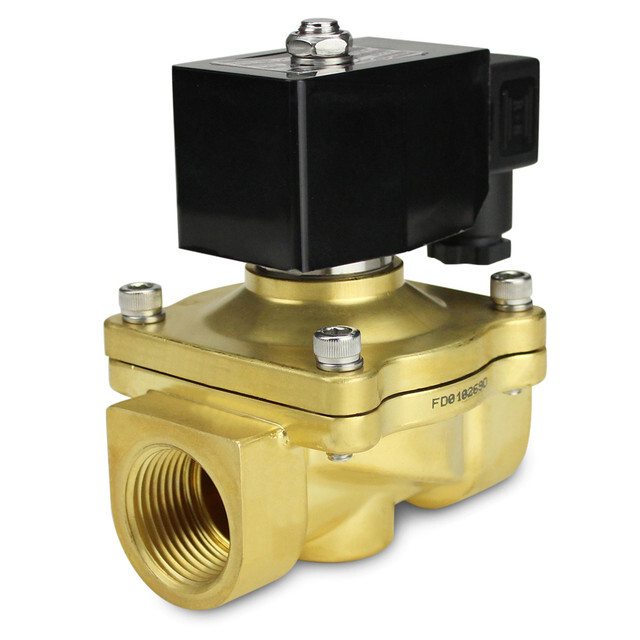
Unlike standard solenoid valves that rely on line pressure to assist opening and sealing, low-pressure gas valves must operate reliably with little to no pressure differential.
Typical characteristics:
- Designed for natural gas, propane, biogas, or low-pressure air
- Operates at near-zero pressure differential
- Emphasizes a tight shutoff to prevent gas leakage
- Often uses direct-acting or balanced designs
Typical Pressure Ranges
Low pressure gas does not have a single universal definition, but in most real-world systems it falls into these ranges:
|
Pressure Type |
Typical Range |
|
Inches of water column |
3 to 14 in. W.C. |
|
PSI equivalent |
~0.1 to 0.5 PSI |
|
Upper low-pressure limit |
Up to 3 to 5 PSI in some systems |
If your system pressure is below 1 PSI, valve selection becomes especially critical.
How Low Pressure Gas Solenoid Valves Work
Direct-acting operation
Most low-pressure gas solenoid valves are direct-acting. This means:
- The solenoid coil directly lifts or lowers the valve seal
- No minimum inlet pressure is required to assist operation
- The valve can open even at 0 PSI differential
This design is ideal for low-pressure gas because it does not rely on line pressure to move the valve.
Why pilot-operated valves usually fail here
Pilot-operated solenoid valves depend on system pressure to open a diaphragm or piston. In low-pressure gas systems, there is often not enough pressure to:
- Lift the diaphragm
- Overcome spring force
- Maintain stable operation
The result is partial opening, chatter, or failure to open at all.
Normally Closed vs Normally Open for Gas
Most gas systems use normally closed (NC) valves for safety.
Normally Closed (NC)
- Valve remains closed when power is off
- Gas flow stops automatically during power loss
- Standard choice for fuel gas and safety shutoff
Normally Open (NO)
- Valve remains open when power is off
- Used only in specific purge or ventilation scenarios
- Less common for fuel gas control
For safety-critical gas applications, NC is the default unless the system design explicitly requires NO behavior.
Common Applications
Low-pressure gas solenoid valves are used in a wide range of systems:
Residential and commercial
- Gas fireplaces
- Gas grills and outdoor kitchens
- Low-pressure gas heaters
- Decorative flame features
Industrial and laboratory
- Burner control systems
- Gas analyzers and sampling equipment
- Test benches and calibration rigs
- Low-pressure air or inert gas distribution
Process and OEM equipment
- Packaging machines using air or gas assist
- Small furnaces or kilns
- Appliance gas trains
Normally Closed vs. Normally Open Solenoid Valves for Gas Service
The choice between a Normally Closed (NC) and a Normally Open (NO) solenoid valve is paramount in gas applications, heavily influenced by safety protocols and the system's operational requirements. For the vast majority of fuel gas and critical safety systems, the NC configuration is the industry standard.Normally Closed (NC) Solenoid Valves: The Default for Safety
A Normally Closed valve is inherently designed for failsafe operation.
- Default State (Power Off): The valve remains tightly closed. The armature is seated, blocking the flow path of the gas.
- Operational State (Power On): Applying the specified electrical voltage to the coil generates a magnetic field, which lifts the armature and opens the valve, allowing gas to flow.
- Critical Safety Feature: In the event of a power failure or loss of electrical supply to the system, the magnetic field immediately collapses, and a spring forces the armature back into the closed position. This automatic and instantaneous cessation of gas flow is critical for preventing uncontained gas leaks or uncontrolled combustion, making it the standard choice for fuel gas shutoff and compliance with most safety codes (e.g., in burner management systems).
Normally Open (NO) Solenoid Valves: Specialized Applications
A Normally Open valve operates in the opposite manner to an NC valve and is reserved for specific, non-fuel gas or auxiliary functions where the desired failsafe condition is to maintain flow.
- Default State (Power Off): The valve remains open, allowing gas flow.
- Operational State (Power On): Applying the specified voltage energizes the coil, pulling the armature down to close the valve and stop the gas flow.
- Common Use Cases: NO valves are primarily used for purging, venting, or specialized process cooling lines where the aim is to ensure the release of gas or air in the event of a system shutdown or power loss. For example, they might be used to vent a hazardous area or a process line to atmosphere when the control power is removed. They are rarely, if ever, used for the primary control of fuel gas due to the inherent safety risk associated with an open flow path during an electrical fault.
Applications of Low-Pressure Gas Solenoid Valves
Low-pressure gas solenoid valves are versatile control components essential for regulating the flow of natural gas, propane, air, and various inert gases in systems where the operating pressure is typically below 0.5 PSI (14 inches of water column) up to moderate pressures (e.g., 5 PSI or 35 kPa), depending on the specific valve design. Their reliability and speed make them integral to both domestic and sophisticated industrial operations.
Residential and Commercial HVAC and Appliance Systems
These applications require reliable, silent operation and compliance with local gas safety codes.
- Modern Gas Fireplaces and Logs: Used as the primary on/off control valve to deliver fuel gas to the burner, often interlocked with a thermopile or remote control system.
- Outdoor Gas Appliances (Grills and Kitchens): Provide a robust shutoff point for propane or natural gas lines, ensuring the flow can be safely and manually controlled or automatically terminated.
- Low-Pressure Heaters and Boilers: Serve as safety shutoff valves within the main gas train of smaller residential and commercial heating units, acting on signals from thermostats or safety limit switches.
- Decorative Flame Features and Patio Heaters: Essential for precise control and instant shutdown of the gas supply to outdoor ambiance features.
Industrial and Laboratory Control Systems
In these environments, precision, repeatability, and chemical compatibility with the gas media are paramount.
- Industrial Burner Management Systems (BMS): NC valves are fundamental components of the "gas train," used as main and pilot safety shutoff valves (SSOVs). They must meet rigorous standards (e.g., UL, CSA, FM approvals) for fast closure times to prevent unsafe gas accumulation.
- Gas Analyzers and Chromatographs: Small-bore, highly inert valves are used to select, divert, and precisely meter extremely small volumes of sample or carrier gases for analytical purposes.
- Test Benches and Calibration Rigs: Employed to sequence and control the flow of various reference gases or air for testing sensors, meters, or industrial components.
- Low-Pressure Air and Inert Gas Distribution: Used throughout manufacturing and laboratory facilities to manage air curtains, pneumatic logic circuits, or the flow of nitrogen, argon, or process gases.
Process Control and Original Equipment Manufacturer (OEM) Integration
OEM manufacturers integrate these valves into their equipment to manage internal gas processes.
- Packaging Machinery: Often utilize air or low-pressure inert gas (like nitrogen) to assist in sealing, filling, or creating modified atmosphere packaging (MAP).
- Small Furnaces, Kilns, and Ovens: Integrated into the appliance's control loop to manage the precise flow of fuel gas required to maintain set temperature profiles.
- Appliance Gas Trains (Commercial and Residential): A critical block of components (including regulators, filters, and solenoid valves) that condition and safely control the gas supply before it reaches the burner. The solenoid valve acts as the final, electrically controlled barrier.
Materials and Seal Selection: Ensuring Safety and Performance in Low-Pressure Gas Solenoid Valves
Material compatibility is paramount, often rivaling pressure rating in importance, especially in sensitive gas applications. The choice of valve body and seal materials directly affects the valve's service life, reliability, and, most critically, safety.Valve Body Materials
The valve body provides the structural integrity and is the primary barrier containing the gas.
- Brass
Brass is the industry standard for handling common fuel gases like natural gas (methane) and propane (LPG). Its popularity stems from its cost-effectiveness, excellent machinability, and broad acceptance and proven track record in low-pressure gas systems. It offers good corrosion resistance to these specific gases under typical operating conditions. - Stainless Steel (304 or 316)
Stainless steel is utilized in applications where a higher level of corrosion resistance is required, such as in environments with moisture, or where gases might have trace contaminants. It is also chosen when cleanliness is critical, as in some laboratory or specialized industrial processes, or simply for maximum long service life and robustness, making it a premium choice. Type 316 stainless steel offers superior resistance to pitting and crevice corrosion compared to Type 304.
Seal Materials (Elastomers)
The seal materials, or elastomers, are crucial for ensuring a leak-tight closure and preventing gas escape when the valve is de-energized. Their selection must account for gas compatibility, temperature range, and pressure cycling.
- NBR (Nitrile Butadiene Rubber / Buna-N)
NBR is a very common and versatile sealing material, frequently specified for general compressed air and certain inert gas applications. It offers good resistance to petroleum-based oils and non-polar solvents. While suitable for many gas systems, its temperature range and chemical resistance are less robust than premium options, making it a baseline material for non-critical or standard air/gas use. - FKM (Fluoroelastomer / Viton®)
FKM is an excellent choice for demanding gas systems. It provides superior temperature resistance and significantly enhanced chemical compatibility compared to NBR. This makes it ideal for a wider range of gases and higher-temperature operational environments, ensuring a reliable and long-lasting seal in fuel gas applications where performance cannot be compromised. - EPDM (Ethylene Propylene Diene Monomer)
EPDM is known for its excellent resistance to steam, hot water, and brake fluid. However, it is less common for fuel gas service (like natural gas or propane) and can swell or degrade when exposed to hydrocarbon-based fuels. If EPDM is being considered, verify compatibility carefully with the specific gas composition, as it is generally reserved for specialized gas mixtures or applications where its unique properties are beneficial and fuel hydrocarbons are absent.
Critical Safety Note:
Always confirm gas compatibility before making a final material selection. Gas service is considerably less forgiving than liquid service. A small incompatibility can lead to seal degradation, leakage, and potentially hazardous situations. Ensure that the elastomer is rated for both the specific gas and the expected minimum and maximum operating temperatures and pressures. You can also use our chemical compatibility resource to check match.
Sizing a Low Pressure Gas Solenoid Valve
Sizing mistakes are the number one cause of low pressure gas valve failures.
Key sizing considerations
- Flow rate, usually expressed in SCFH or Nm³/h
- Available inlet pressure, often only inches of water column
- Pressure drop across the valve
- Port size, not just pipe size
Oversizing does not fix low pressure problems. A valve that is too large can:
- Struggle to seal properly
- Respond slowly
- Be more sensitive to contamination
Undersizing causes excessive pressure drop and restricted flow.
If Cv is provided, convert carefully and account for gas compressibility at low pressure.
Electrical Considerations
Low pressure gas solenoid valves still rely on the coil for actuation, so electrical details matter.
Voltage
- 24V AC or DC for controls and automation
- 120V AC for fixed installations
- Always match coil voltage exactly
Duty cycle
- Continuous duty coils are preferred for gas valves
- Intermittent duty coils may overheat if left energized
Power consumption
- Direct-acting valves often draw more power than pilot-operated valves
- This is normal and expected in low pressure designs
Safety and Compliance Notes
Gas valves are not interchangeable with liquid valves.
Important considerations:
- Use valves rated for gas service
- Verify leakage class and shutoff performance
- Follow local fuel gas codes and appliance standards
- Proper ventilation and leak testing are mandatory
A valve that works fine with air may not be safe for fuel gas.
Common Failure Symptoms and Causes
|
Symptom |
Likely Cause |
|
Valve will not open |
Pilot-operated valve used at low pressure |
|
Buzzing or chatter |
Insufficient pressure differential |
|
Gas leakage |
Wrong seal material or worn seat |
|
Slow response |
Oversized valve or coil mismatch |
|
Overheating coil |
Incorrect voltage or duty cycle |
Most failures trace back to incorrect valve type rather than defective parts.
How to Choose the Right Low Pressure Gas Solenoid Valve
Before selecting a valve, confirm:
- Gas type and composition
- Minimum and maximum pressure
- Required flow rate
- Normally closed or normally open
- Voltage and duty cycle
- Installation orientation and space constraints
If any of these are unclear, stop and validate before ordering.
Final Thoughts
Low pressure gas solenoid valves solve a very specific control problem, reliable gas shutoff and flow control when pressure is minimal. Using a standard solenoid valve in these systems almost always leads to poor performance or safety issues.
The right valve will be direct-acting, properly sized, compatible with the gas, and matched electrically to the control system. When selected correctly, these valves operate quietly, seal tightly, and provide years of reliable service.
Need help selecting a low pressure gas solenoid valve? Send us your gas type, pressure, flow rate, and voltage. Our team can help you size and select the correct valve the first time.