
Posted by Electric Solenoid Valves on Feb 25th 2026
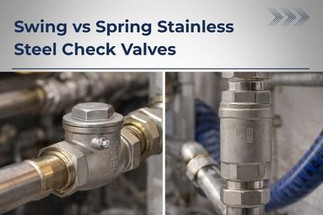
Check Valves Explained: Swing vs Stainless Steel Spring Check Valves
Backflow control is not optional in fluid systems, and check valves play a critical role in preventing reverse flow. A properly selected check valve protects pumps, stabilizes pressure, and reduces system wear. A poorly selected check valve creates water hammer, vibration, and repeated service calls.
If you are specifying a stainless steel NPT check valve, the real decision usually comes down to two designs: swing or spring. The difference between them is not cosmetic. It directly affects closure speed, pressure shock behavior, and pump protection.
This guide breaks down exactly when to use each so you can select the correct check valve the first time.
What Check Valves Actually Do
Check Valves are essential components that automatically manage flow direction in a pipeline. Functioning as one-way valves, they permit flow in a single direction (forward) while preventing any flow reversal.
Their operation is purely mechanical, relying solely on pressure differential:
- Opening: The valve opens when the pressure upstream surpasses the pressure downstream.
- Closing: It automatically closes when the pressure drops or reverses.
Since check valves lack external controls or actuators, their performance is entirely dependent on the design of their internal closing mechanism and how they react to changes in system pressure.
The Two Stainless Steel NPT Check Valve Designs
At ElectricSolenoidValves.com, we supply two stainless steel check valve types with female NPT threaded connections. Here’s a quick look at their specifications:
- Stainless Steel Swing Check Valves (½ inch to 2 inch NPT)
- 304 Stainless Steel body and disc, PTFE seal
- Rated up to 200 PSI
- Temperature range: ‑4°F to 356°F (‑20°C to 180°C)
- Suitable for water, air, fuel, and other compatible fluids
- Stainless Steel Spring Check Valves (¼ inch to 3 inch NPT)
- 304 Stainless Steel body, core, and spring, PTFE seal
- Rated up to 1000 PSI (800 PSI for 3” size)
- Temperature range: ‑4°F to 356°F (‑20°C to 180°C)
- Suitable for water, air, fuel, and other compatible fluids
- Spring‑loaded design eliminates water hammer and works in any orientation
Both are designed for industrial and commercial threaded piping systems. The difference is how they close under pressure change.
Swing Check Valves
A swing check valve uses a hinged disc inside the body. When fluid moves forward, the disc swings open. When the flow stops, it swings closed. The functionality of this valve is entirely passive, relying on the fluid dynamics within the pipeline.
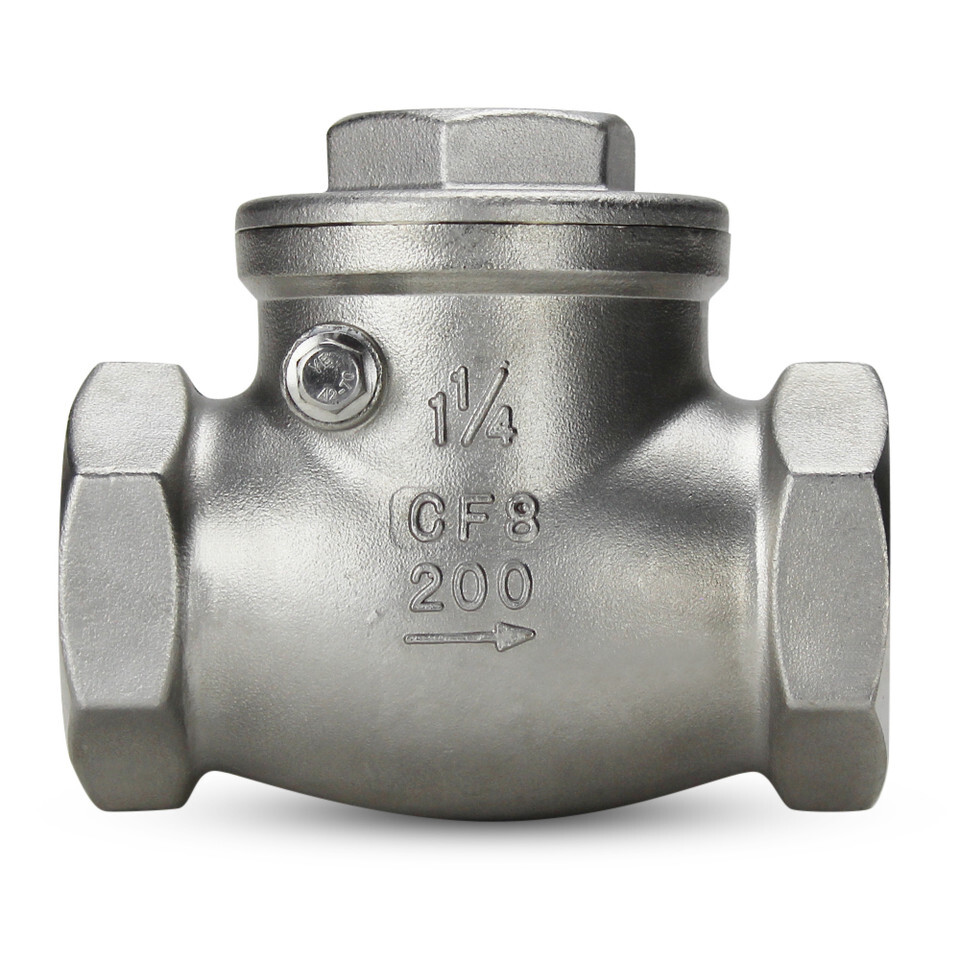
Mechanism of Operation
- Forward Flow: When the system is operational, the forward pressure and kinetic energy of the fluid push the hinged disc away from the seat, effectively opening the valve. The disc "swings" out of the flow path, allowing the fluid to pass through with minimal restriction.
- Stopping Flow: When the flow velocity decreases or the pump stops, the forward pressure dissipates.
- Reverse Flow Prevention: When flow ceases entirely or attempts to reverse direction, the disc naturally returns to the closed position. This closure is achieved primarily by the force of gravity acting on the disc and, crucially, by the differential pressure created by the incipient backflow. The reverse pressure pushes the disc firmly against the valve seat, creating a seal and preventing any backflow into the system.
Because there is no reliance on an internal spring mechanism to assist in opening, the resistance offered to the forward flow is exceptionally low, resulting in a significantly lower pressure drop compared to spring-assisted or lift check valve designs.
Optimal Applications for Swing Check Valves
Swing Check Valves are preferred in systems where maintaining system pressure and avoiding energy loss is paramount.
- Horizontal Pipe Runs: This is the ideal installation orientation. Gravity aids in the disc's natural return to the closed position upon flow cessation, ensuring a reliable seal.
- Continuous or Steady Flow Systems: They perform best in systems where flow is consistent and there are infrequent changes in direction or velocity. This minimizes wear and tear on the disc and hinge mechanism.
- Applications Prioritizing Low Pressure Drop: Due to the unimpeded flow path once the disc is fully open, swing checks are the go-to choice for large-diameter lines or systems requiring high efficiency and low operating costs.
- General Water Transfer Lines: They are widely used in municipal water distribution, fire protection systems, and water treatment plants for bulk fluid movement.
Significant Limitations and Problem Areas
While effective in steady-state applications, the operational characteristics of the swing check valve make it unsuitable for highly dynamic or complex systems.
- Vertical Pipe Runs (Flowing Upwards): In this orientation, gravity works against the closing mechanism, potentially delaying the closure of the disc. This delay increases the likelihood of significant reverse flow occurring before the valve seats fully. Special designs (often incorporating a counterbalance) or alternative valve types are necessary for vertical upward flow.
- Pump Discharge Lines (Frequent Start/Stop Cycles): When a pump suddenly shuts down, the water column rapidly decelerates and then attempts to reverse. The inherent slow closing speed of the swing check valve means it may not seat before the reverse pressure wave builds up.
- Systems Prone to Pressure Shock (Water Hammer): The slow closure in dynamic systems can lead to a condition known as "valve slam." As reverse flow accelerates, it forcefully slams the disc shut against the seat. This impact generates a high-intensity pressure wave (water hammer) that can damage the valve, seating surface, pipe joints, and upstream equipment (like pumps).
- Oversizing Issues: If the valve is significantly larger than necessary for the flow rate, the forward flow velocity may not be sufficient to hold the disc fully open. The disc will partially open and then continuously move or "flutter" under the flow. This constant vibration leads to premature wear of the disc, the hinge pin, and the sealing seat, ultimately resulting in reduced service life and eventual leakage.
Spring Check Valves
The Spring Check Valve represents a distinct and reliable alternative to traditional hinged-disc designs. Unlike swing or lift check valves that rely primarily on gravity or reverse flow to close, the spring check valve (vertical or in-line installation compatible) uses a sophisticated spring-loaded mechanism, typically featuring a poppet or piston.
Integration Tip: For best results, install a spring check valve downstream of solenoid valves. This prevents back pressure and ensures solenoid valves operate reliably.
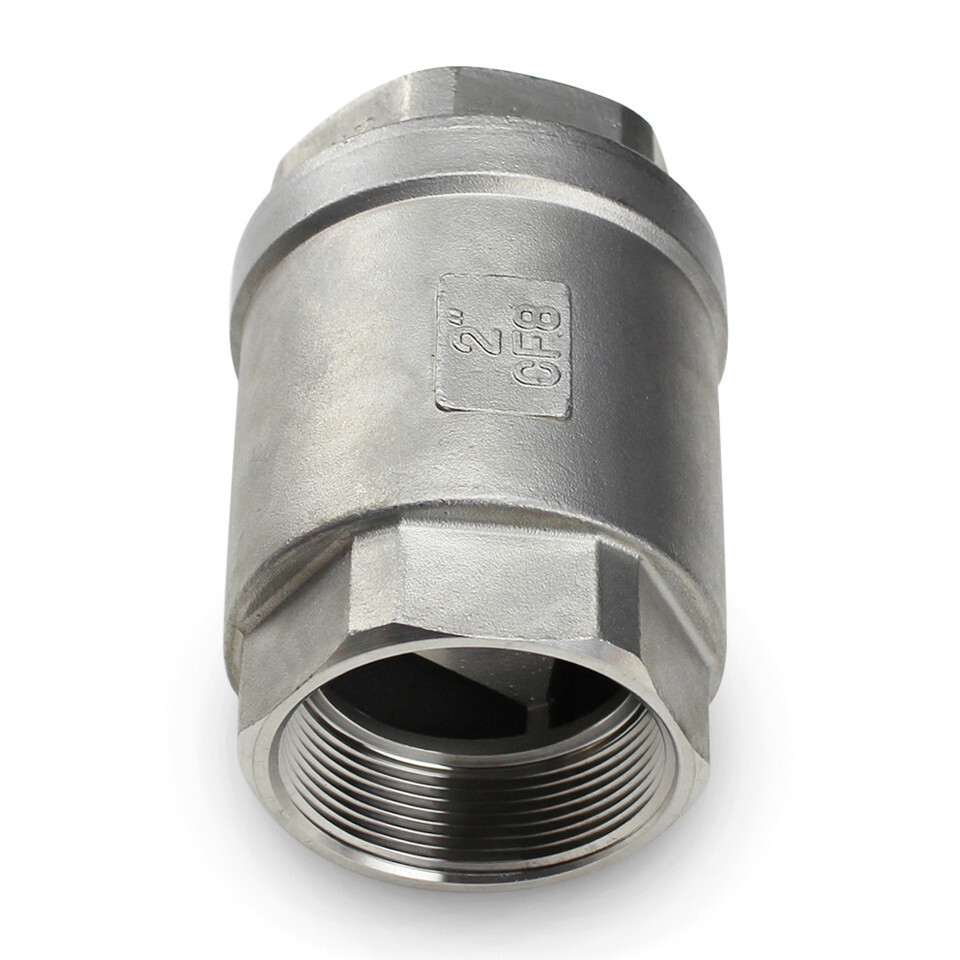
Mechanism of Operation
A check valve works by balancing system pressure against a spring. When pressure rises, the valve opens. When pressure drops, the spring forces it closed.:
- Opening (Forward Flow): When fluid flows in the forward direction, the system pressure acting beneath the poppet (or piston) must overcome the closing force exerted by the calibrated spring and the static fluid head (if applicable). Once the pressure differential is sufficient, the spring is compressed, the poppet lifts off the seat, and the valve opens, allowing unimpeded flow.
- Closing (Reverse Flow/Pressure Drop): As the forward flow diminishes or reverses, the pressure differential across the valve drops. Crucially, the spring-assist mechanism immediately takes effect. The stored mechanical energy in the compressed spring forces the poppet rapidly and positively back onto the seat before significant reverse flow velocity can develop.
This spring-assisted, rapid closure is the valve's defining characteristic, offering a decisive advantage in managing hydraulic transients.
Optimal Applications and System Benefits
The unique design characteristics of the spring check valve make it the preferred choice for several demanding applications:
- Pump Discharge Protection: Essential for safeguarding centrifugal or positive displacement pumps from backflow, which can cause severe damage, impeller spinning, or motor overload upon restart. The quick closure minimizes column separation and subsequent slamming.
- Vertical Pipe Runs: These valves are ideal for installations in upward-flowing vertical pipelines where gravity cannot be relied upon to assist the closure of a swing-style check valve. The spring ensures closure regardless of the valve's orientation relative to gravity (though they are specifically designed for vertical runs).
- Booster and Multi-Pump Systems: In systems where multiple pumps operate in parallel or sequence, spring check valves prevent pressurized fluid from one active pump from entering and spinning the impeller of a non-operational pump.
- Systems with Frequent Cycling: Applications involving frequent on/off cycles, such as in water treatment or HVAC pressure-boosting systems, benefit from the robust and predictable operation of the spring mechanism, leading to reduced wear on internal components.
- Mitigation of Water Hammer: The most significant advantage is its ability to limit pressure shock (water hammer). By closing instantly upon flow decay, the valve drastically reduces the duration of reverse flow and limits the fluid velocity at the moment of closure, thereby minimizing the pressure wave generated when the flow is abruptly stopped.
Design Trade-Off: Pressure Drop
While offering superior reliability and water hammer protection, the spring design introduces a necessary trade-off in system performance:
- Slightly Higher Pressure Drop: The presence of the spring and the poppet's profile inherently creates a greater resistance to flow compared to the open pathway of a fully-open swing check valve. The energy required to compress the spring translates directly into a minor, but measurable, permanent head loss across the valve.
In high-reliability systems, particularly those utilizing pumps, this marginal increase in pumping energy required to overcome the spring force is widely accepted. The improvement in long-term equipment protection and the drastic reduction in the risk of destructive water hammer events typically far outweigh the cost associated with the slight pressure drop. The trade-off consistently results in enhanced system stability and operational longevity.
Water Hammer and Closure Speed
Water hammer occurs when fluid momentum stops abruptly and pressure spikes through the line.
It can lead to:
- Loosened threaded joints
- Cracked fittings
- Seal damage
- Pump wear
- Excess noise
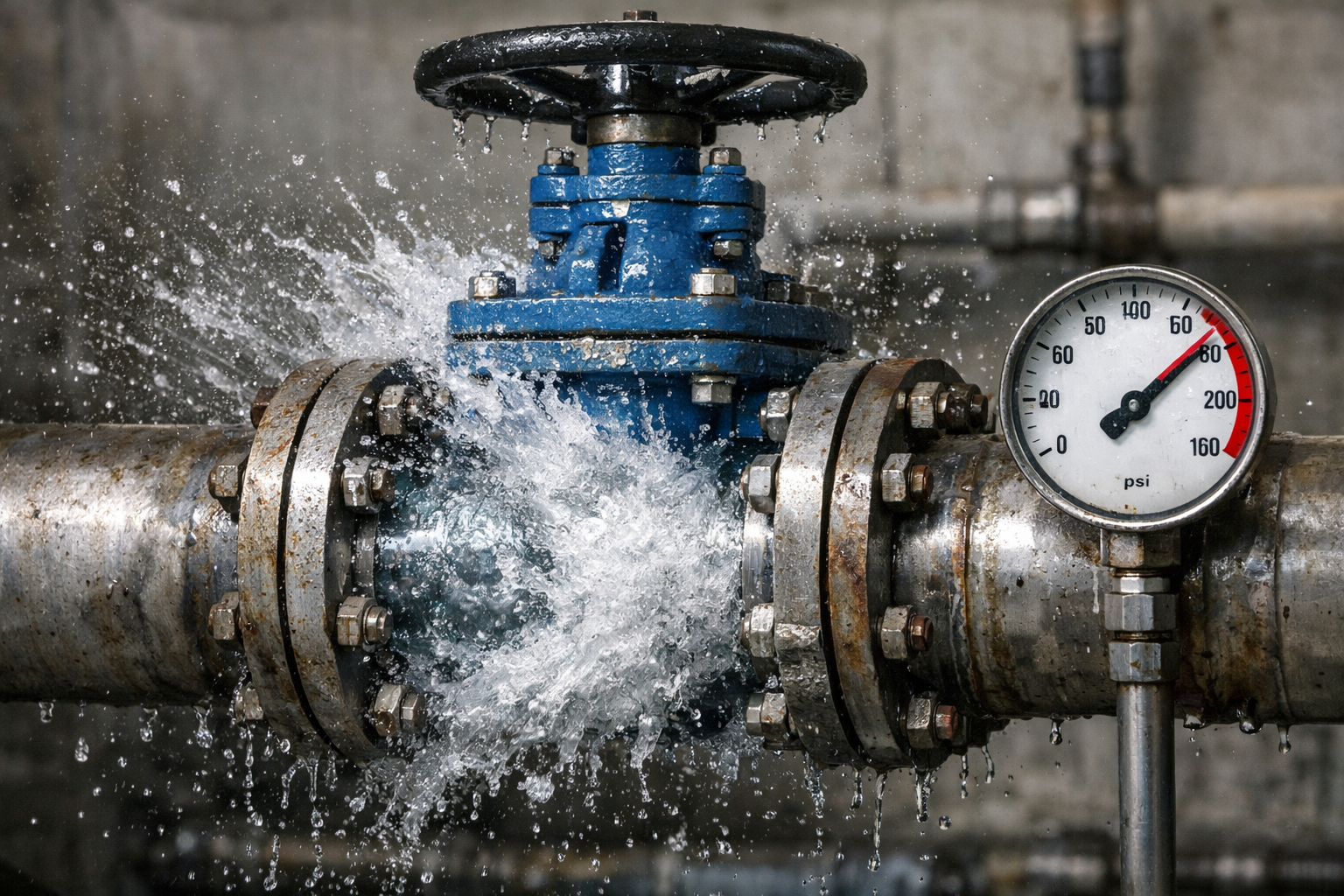
Swing Check Valves rely on gravity and backflow to close. Spring Check Valves close faster due to the mechanical force of the spring.
If your system cycles rapidly or includes a pump shutdown event, faster closure reduces shock potential.
Cracking Pressure and Performance
Cracking pressure is defined as the minimum upstream pressure necessary to initiate valve opening.
The required cracking pressure varies by valve type:
- Swing check valves typically have lower cracking pressure, primarily relying on the weight of the disc to remain closed.
- Spring check valves require sufficient pressure to overcome the opposing tension of the spring.
It is crucial to carefully consider cracking pressure, particularly in gravity-fed or very low-pressure systems. In contrast, in pump-driven systems, the cracking pressure often contributes to more reliable valve closure behavior.
Ultimately, valve selection must be based on alignment with the system's operating pressure range.
Swing vs Vertical Check Valve Quick Comparison
|
Condition |
Recommended Design |
|
Horizontal steady flow |
Swing Check Valve |
|
Pump discharge line |
Vertical Check Valve |
|
Vertical installation |
Vertical Check Valve |
|
Concern about water hammer |
Vertical Check Valve |
|
Lowest forward pressure drop |
Swing Check Valve |
If a pump is involved and there is uncertainty, default to a vertical spring check valve.
Common Applications for Stainless Steel Check Valves
Stainless steel check valves are essential components in a wide range of fluid and gas handling systems, offering superior performance and durability, particularly in challenging operational environments. The robust nature of stainless steel makes it the material of choice over standard options like brass or plastic in many critical applications.
Typical Applications
These specialized check valves, whether utilizing swing, lift, or ball designs, are commonly deployed across numerous sectors:
|
Application Sector |
Specific Use Case |
|
Irrigation Systems |
Preventing backflow from lines into pumps or water sources, protecting against contamination and hydraulic shock (water hammer) upon pump shutdown. |
|
Water Treatment Setups |
Ensuring unidirectional flow in chemical dosing lines, filtration systems, and potable water distribution networks to maintain quality and regulatory compliance. |
|
Pump Protection Lines |
Isolating centrifugal and positive displacement pumps from downstream pressure surges and protecting against rapid depressurization that can damage impellers or seals. |
|
Industrial Process Piping |
Controlling the flow of various chemicals, hot fluids, steam, and gases in manufacturing, refining, and power generation facilities where high temperatures and pressures are common. |
|
Air Systems (Compressed Air) |
Preventing air compressors from back-pressuring into the system when shut down and maintaining system pressure efficiently. |
|
Equipment Isolation Assemblies |
Used in conjunction with other isolation valves (like ball or gate valves) to ensure that maintenance or repair on one piece of equipment does not affect the operation or integrity of adjacent components. |
|
Chemical Processing |
Handling aggressive or corrosive media, where the inert nature of stainless steel prevents degradation of the valve material and subsequent process contamination. |
|
Food and Beverage Industry |
Facilitating hygienic and sanitary operations where ease of cleaning (CIP/SIP capability) and resistance to sanitation chemicals are paramount. |
Advantages of Stainless Steel Material
The choice of stainless steel (typically 304 or 316) is a significant upgrade from standard materials like brass, especially in demanding environments. This construction provides:
- Superior Corrosion Resistance: Stainless steel forms a passive chromium oxide layer that inherently resists rust and chemical attack from various media, including mild acids, alkalis, and saltwater. This significantly extends the valve's service life.
- Enhanced Structural Strength: Stainless steel offers higher tensile strength and temperature tolerance than brass, making it suitable for high-pressure and high-temperature applications common in industrial piping.
- Wider Media Compatibility: The material is suitable for a broader range of liquids and gases, including those that would degrade or leach contaminants from other valve materials.
Installation and Integration Considerations
When installing stainless steel check valves, especially in combination with electrical actuators or solenoid valves, precision and adherence to specifications are crucial for system reliability and safety.
- Thread Compatibility (NPT): A critical and common pitfall is the mismatch of pipe threads. Always confirm NPT (National Pipe Thread) or other specified thread compatibility between the check valve and the adjacent piping or fittings. A thread mismatch, even a subtle one, is a leading cause of leaks and system failure in threaded fluid systems. Proper thread sealant (like PTFE tape or pipe dope) designed for the specific media and pressure must also be used.
- Pressure Rating Alignment: The maximum operating pressure (MAWP) of the check valve must meet or exceed the maximum pressure the system will experience, including potential pressure surges. Mismatched pressure ratings can lead to valve failure, often with catastrophic consequences.
- Media Compatibility: Confirm that the stainless steel grade (e.g., 316 for higher corrosion resistance) and the material of the internal seals (e.g., PTFE, Viton, EPDM) are chemically compatible with the fluid or gas being handled. Incompatibility can result in seal degradation, leaks, or component failure.
Sizing Matters More Than Many Realize
Matching a valve to pipe diameter alone is not sufficient.
Improper sizing leads to:
- Disc flutter
- Reduced sealing performance
- Noise
- Accelerated wear
Proper sizing of check valves is essential and should be based on the actual flow rate and fluid velocity, rather than simply matching the connection size. A common cause of premature check valve failure is oversizing.
What Happens When the Wrong Check Valve Is Installed
The wrong valve rarely fails immediately. Instead, system symptoms develop:
- Repeated banging or slamming
- Increased vibration
- Pump seal degradation
- Loosening threaded joints
- Reduced equipment lifespan
Correct selection eliminates recurring problems. Recurring problems, often misdiagnosed as product defects, are typically caused by a mismatch between the chosen valve type and the system's dynamics. Selecting the correct valve is key to preventing these issues.
Final Selection Checklist Before Ordering
Confirm:
- Pipe size
- Operating pressure range
- Estimated flow rate
- Media type
- Installation orientation
- Whether the valve is installed on pump discharge
If your system cycles frequently or protects a pump, select the vertical spring check valve.
If your system runs horizontally with stable flow and minimal pressure fluctuation, a swing check valve may be appropriate.
Stainless Steel NPT Check Valves at Electricsolenoidvalves.com
We supply:
- Stainless Steel Swing Check Valves, 1/2 inch to 2 inch NPT
- Stainless Steel Spring Check Valves, 1/4 inch to 3 inch NPT
Both use female NPT threaded connections and are designed for industrial and commercial fluid control applications.
If you are uncertain which design fits your system, provide your system details. We can help confirm compatibility before you place your order.
Final Thoughts
Check valves are protective components. Their purpose is straightforward, but their performance depends on application details. Choosing between swing and spring check valves directly impacts closure speed, water hammer risk, and pump protection. Select the design that matches your system behavior, not just your pipe connection.
Ready to Order?
If you need help confirming which design is correct for your application, contact our team with your system details, and we will guide you before installation. Selecting correctly once prevents repeated problems later.
Call us Monday to Friday between 9 am and 5 pm (EST) at 800‑983‑8230 or email us at sales@electricsolenoidvalves.com.
| BROWSE CHECK VALVES NOW |