

Posted by Electric Solenoid Valves on Jan 14th 2026
What is the Most Reliable Valve Type?
If you are searching for "the most reliable valve type," you are probably trying to avoid one of these outcomes: leaks, downtime, callbacks, or a valve that works fine on the bench but fails after a week in the real system.
Here's the honest answer: there is no single valve type that wins every time. Reliability comes from match quality. Match the valve's design, materials, seals, and actuation method to your media, pressure, temperature, and operating cycle. Get that right and "reliable" stops being a hope and becomes a predictable outcome.
At ElectricSolenoidValves.com, we sell a wide range of valves, and the pattern is consistent. The "most reliable valve" for a given system usually is the one that:
- Uses the right materials and seals for the media and temperature.
- Fits the pressure conditions (including minimum differential pressure, if applicable)
- Fits the duty cycle (how often it switches, and how long it stays energized).
- It is protected from contamination with basic filtration when needed.
- It is installed and wired correctly. So the valve is not fighting the system.
This guide walks you through the valve types we carry, when each one tends to be the most reliable choice, and the common selection mistakes that shorten valve life.
What "Reliable" Actually Means for a Valve
Reliability in a valve extends far beyond a simple assessment of its physical build quality or "sturdiness." True reliability encompasses several factors throughout the valve's lifecycle, from its design and material selection to its operation and maintenance.
In the real world, reliability usually means some combination of:
- Leak-tight Sealing Over Time (Internal and External Integrity)
- Internal Shutoff (Seat Integrity): The valve must maintain a tight, repeatable seal against the flow media when in the closed position, preventing leakage or "weeping." This internal shutoff must remain effective over thousands, or even millions, of cycles, resisting wear and erosion from the media and pressure.
- External Sealing (Containment): Critical for safety and compliance, the valve must prevent any escape of the process media to the environment. This includes leak-tightness at:
- Body Joints: Where body sections are bolted or welded together.
- Stem Seals/Packing: The dynamic seal surrounding the moving stem, which is the most common point of external failure in many valve types. The packing system must compensate for stem movement, temperature fluctuations, and pressure cycling without degradation.
- Repeatable and Precise Switching Performance
- Consistent Response: The valve must switch—whether opening, closing, or modulating—predictably and consistently. This is crucial for process control and automation.
- Freedom from Operational Issues: A reliable valve avoids common mechanical failures:
- Sticking (Hesitation): The valve or actuator hesitates or requires excessive force to move, often due to seal friction, media buildup, or actuator wear.
- Chattering: Rapid, uncontrolled oscillation, usually occurring in flow control or check valves, leading to premature component wear and noise.
- Slow Response: The time between receiving a signal and achieving the desired position must remain within specification, ensuring timely process adjustments and the activation of safety interlocks.
- Stable Performance Under Variable Conditions (Robustness)
- Temperature Resilience: Performance must remain stable across the full spectrum of expected operating temperatures, from ambient lows to process highs. Extreme temperatures can affect material strength, cause differential thermal expansion (leading to leaks or binding), and degrade seal materials.
- Pressure Stability: The valve must maintain its sealing and operational characteristics throughout the anticipated pressure range, resisting deformation or failure during pressure spikes or prolonged high-pressure service. This includes resisting the effects of pressure surges (water hammer).
- Survivability in the Process Media (Material Compatibility)
- Chemical Resistance: The valve's wetted components (body, trim, seals) must be compatible with the flow media. This involves resisting general corrosion, stress corrosion cracking, and chemical attack.
- Tolerance to Media Characteristics: Reliability requires surviving in specific media conditions:
- Additives/Cleaners: Resistance to chemicals used for sanitizing or system flushing.
- Oils/Fuels: Compatibility with various hydrocarbon compounds which can degrade incompatible elastomeric seals.
- Dissolved/Suspended Solids: Resistance to erosion (abrasion from particles) and buildup/fouling, which can impede movement and compromise seating surfaces.
So instead of asking “which valve is most reliable,” the better question is:
Which valve type is most reliable for my operating conditions?
The Main Valve Types We Carry, and What Each One Is Best At
1) Solenoid valves
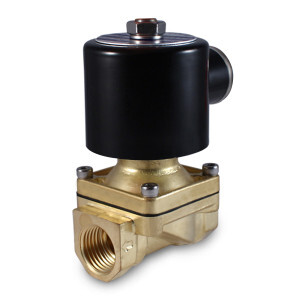
A solenoid valve uses an energized coil to create a magnetic field that lifts a plunger and opens a flow path. In a normally closed valve, the valve stays shut when not energized and opens when power is applied.
Solenoids are a great reliability choice when you need:
- Fast on/off control
- Frequent cycling
- Simple automation
- Compact installation
But reliability drops fast when the system is dirty or when the valve is used outside its pressure or temperature limits. Even our own comparison notes that solenoid valves can be susceptible to clogging when the media carries particulate matter
Where solenoids fail most often
- Debris causing sticking or leakage at the seat
- Seal material mismatch
- Coil overheating from incorrect voltage, poor wiring, or long energized periods
- Using a valve that needs differential pressure in a low-pressure or “near-zero” differential setup
How to make a solenoid valve more reliable
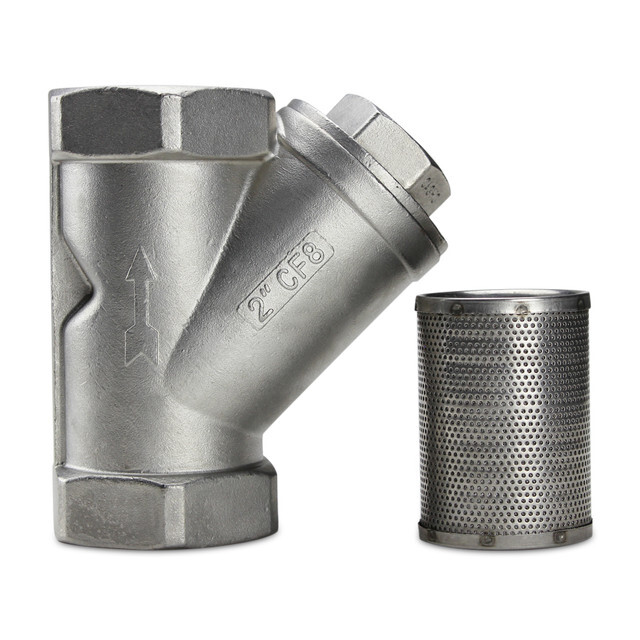
The simplest reliability upgrade is filtration. If your system can carry rust, scale, pipe dope, or particulate, add a strainer upstream. Our Y-strainers are built specifically to catch debris and protect downstream components.
If you are choosing a solenoid valve for general-purpose water, air, or compatible fluids, start with our Normally Closed Solenoid Valves. They are closed by default and powered to open, which is exactly what most people want for safety and fail-closed behavior.
If you are not sure about seals, do not guess. Use our seal guide and compatibility resources:
The seal guide is also a good reminder that seals drive valve life, not just the valve body.
2) Electric motorized ball valves
A motorized ball valve uses a motorized actuator to rotate a ball with a hole through it. When the hole lines up with the pipe, flow is open. When it turns perpendicular, the flow is closed.

One key reliability advantage is that motorized ball valves do not require power to hold position the way an energized solenoid does. That matters when your application spends long periods fully open or fully closed.
Motorized ball valves are often the most reliable choice when you need:
- Higher flow paths compared to typical solenoid valves
- Lower heat load from continuous energizing
- Fewer issues with water hammer from instant shutoff (because they typically move slower than a solenoid)
- A valve that can sometimes be manually operated in a pinch (depending on model)
We carry electric ball valve options including different control styles (you will see 2-wire auto return and 3-wire control options in our Electric Ball Valves catalog).
Where motorized ball valves fail most often
- Incorrect wiring or control logic (especially when mixing control styles)
- Trying to use a ball valve as a “throttling” valve when it is intended for on/off
- Installing in a dirty system without protecting the seats from grit
- Media or temperature not compatible with the seat and seal materials
If you are deciding between a solenoid valve and a motorized ball valve, this internal guide will help you make the call faster:
3) Manual stainless steel ball valves
If you do not need automation, a manual ball valve is hard to beat for reliability. It is mechanically simple, easy to understand, and easy to service in the field.
Our Manual Ball Valves include 2-piece, 3-piece, and 3-way options. The 3-piece design can be especially practical because it is built to be taken apart for cleaning and maintenance.
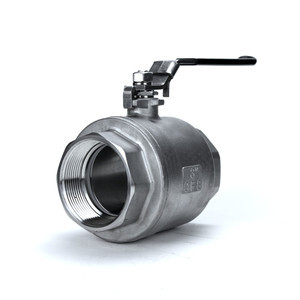
Our stainless steel manual ball valves are also rated for high pressure, up to 1,000 PSI, and are built with 304 stainless steel bodies and PTFE seals. Manual ball valves are often the most reliable choice when you need:
- High pressure tolerance
- Simple, repeatable shutoff
- A valve that can be maintained instead of replaced
- No power, no controls, no coils
Where manual ball valves fail most often
- Seat damage from grit, scale, or debris
- Over-torqueing handles or using extensions
- Stem packing leaks from thermal cycling or mechanical stress
Filtration helps here, too. Keeping abrasive solids off the ball seats dramatically improves service life.
4) Steam solenoid valves
Steam is one of the fastest ways to kill the wrong valve. Temperature, pressure swings, and heat soak into the actuator area all punish standard designs.
Our Steam Valves are designed for steam and high-temperature service using a 304 stainless steel body and PTFE diaphragm seal. We also built additional separation between the valve body and the actuator to reduce actuator overheating from dissipating heat.
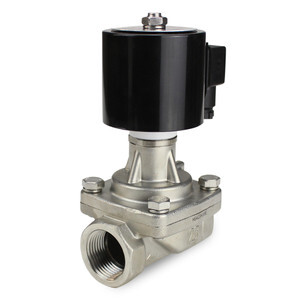
The ratings for these steam and hot water solenoid valves list temperatures from 32 to 356°F (0 to 180°C), with pressure ranges that vary by coil type, AC rated up to 145 PSI, and DC rated up to 90 PSI.
If steam is your media, the most reliable “valve type” is not a generic solenoid valve. It is a steam-rated solenoid valve with the right seal material and thermal design.
5) Low-pressure gas solenoid valves
Low-pressure gas applications are a different game. The valve has to seal tightly even when pressure is low, and the seal material has to behave at lower temperatures and conditions common in gas service.
Our Low-Pressure Gas Valves use a higher tension spring and NBR (nitrile) seals rather than Viton, specifically to keep the seal in place and prevent leaks under low pressure and temperature conditions.
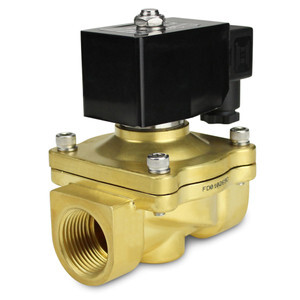
If your goal is reliability in low-pressure gas, using a general-purpose valve is a common failure path. Pick a valve engineered for that sealing problem.
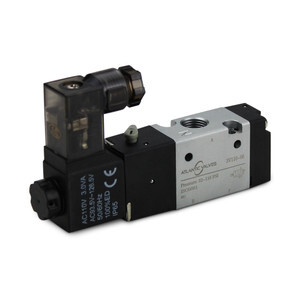
6) Pneumatic solenoid valves
Pneumatic solenoid valves are built to control compressed air flow and direction in pneumatic systems (cylinders, actuators, and air logic). Our Pneumatic Valves include 3-way and 5-port (4-way) options in multiple port sizes. They are reliable when you use them for what they are designed to do: air control. They are not the right “valve type” for handling water, fuels, or process liquids through a pipe network.
Valve Comparison Table
|
Valve type |
Reliability strengths |
Common reliability killers |
Best fit |
|
Manual ball valve |
Fewer failure points, no coil, no actuator electronics. Many options are designed to be long-lasting and serviceable. |
Misuse (partial open throttling), seat wear from debris, wrong material for chemical/temperature |
Simple isolation, shutoff, maintenance points |
|
Motorized ball valve |
Gentle open/close, low pressure drop, handles larger sizes and dirty media more reliably than many solenoids. |
Wrong enclosure for wet areas, over-torquing from debris buildup, miswired controls |
Automation for water, irrigation, general fluids, higher flow, dirtier media |
|
Solenoid valve (2-way / 3-way) |
Fast switching, compact, easy control, great for on/off automation |
Debris, incorrect pressure differential, wrong seal material, heat buildup in coil, improper voltage |
Clean fluids, fast cycling, compact control panels |
|
Pneumatic solenoid valves (directional control) |
Dependable long-term compressed air service when correctly applied. |
Wet/dirty air, inadequate filtration and lubrication where required, wrong valve configuration |
Pneumatic cylinders, air logic, automation equipment |
A practical reliability matrix
|
Your situation |
Valve type that tends to be most reliable |
Why |
|
Fast on/off control, frequent cycling, clean media |
Solenoid valve |
Quick actuation, compact, automation-friendly |
|
Long periods open or closed, want lower power draw during hold |
Motorized ball valve |
Does not require power to hold a position like solenoids |
|
Simple manual isolation, high pressure, serviceable design |
Manual stainless ball valve |
Mechanical simplicity, high-pressure rating, PTFE seals |
|
Steam or high-temp liquids |
Steam-rated solenoid valve |
PTFE seal, thermal design, steam temperature ratings |
|
Low-pressure gas where sealing matters most |
Low-pressure gas solenoid valve |
Higher tension spring, NBR seals to reduce leak risk |
|
Protect downstream valves from debris |
Y-strainer |
Captures particles larger than screen size, reduces sticking and leakage risk |
The reliability details most people miss
Materials are not cosmetic; they determine corrosion, stress cracking, and life
Valve body material is a reliability decision, not a budget checkbox. Plastic, brass, and stainless steel each have a “best use” zone. For example, plastic valves are corrosion-resistant and lightweight, but they have temperature and pressure limitations and can be vulnerable to physical stress.
If you want a material-focused breakdown (and you should, if reliability is the goal), read:
Reliability drivers that matter more than “valve type.”
Material choice, match it to media and environment
Material mistakes are one of the fastest ways to “create” unreliability.
- Brass is widely used and cost-effective for many general-purpose applications, but we explicitly note that brass is not recommended for drinking water, and we point buyers toward stainless steel or plastic for that use case.
- Stainless steel is a strong choice when you need corrosion resistance, and you are dealing with hygienic or drinking water applications. We position stainless as safe for drinking water and food-grade use.
- Plastic is a strong reliability choice when corrosion is your enemy (fertilizers, many dosing applications, certain chemicals), as long as temperature, pressure, and mechanical limits are respected
If you are unsure, start with our material guide, then narrow the valve type.
Seal material drives leak rate and service life
A valve with the wrong seal is unreliable, even if the body is “strong.” Our seal materials guide spells it out: valve seals are pivotal to valve life, and incompatible seals can cause major system problems. If you are unsure, stop and confirm:
- Media (including additives, cleaners, oils, fuels)
- Temperature range
- Whether the system sees dry running, vacuum, or rapid cycling
Then check:
Contamination control is the cheapest reliability upgrade
If your media can carry rust, scale, or solids, plan filtration upstream. This is not optional for long life in many systems. A small strainer can save you repeated valve failures and “mystery leaks.”
Start here:
Installation and wiring mistakes create “bad valves” that are not actually bad
A valve that is wired incorrectly, installed backward, mounted with stress, or subjected to water hammer can look like a product defect, but it is really a system mismatch.
If you are doing solenoid installs, this is worth bookmarking:
What we recommend as “most reliable” in plain terms
If you force a single answer, here is the most accurate way to say it:
- For simple shut-off and isolation, a stainless manual ball valve is one of the most reliable options because it is mechanically simple, uses durable materials, and is built for high pressure service.
- For automated on/off control where the valve stays energized for long periods, a motorized ball valve is often more reliable because it does not need continuous power to hold position like a solenoid valve does.
- For fast automation and frequent cycling, solenoid valves are very reliable when the media is clean, and the valve is properly matched to pressure, temperature, and seals.
- For steam, low-pressure gas, and other specialized conditions, the “most reliable” valve is the one designed for that condition, like our steam-rated and low-pressure gas valve categories.
That’s not a dodge, it’s how you avoid buying the right valve type for the wrong job. For reliability, the best valve is always the one matched to your media, pressure, temperature, and duty cycle.
Explore ElectricSolenoidValves.com for solenoid, motorized, manual, steam, and gas valves engineered for long service life. If you’re unsure about seals, media, or specifications, check our Compatibility Database or use the Contact Us form to send your details. Our team will help you match the right valve to your system.